Clear arrival times
We keep you posted on when to expect us.
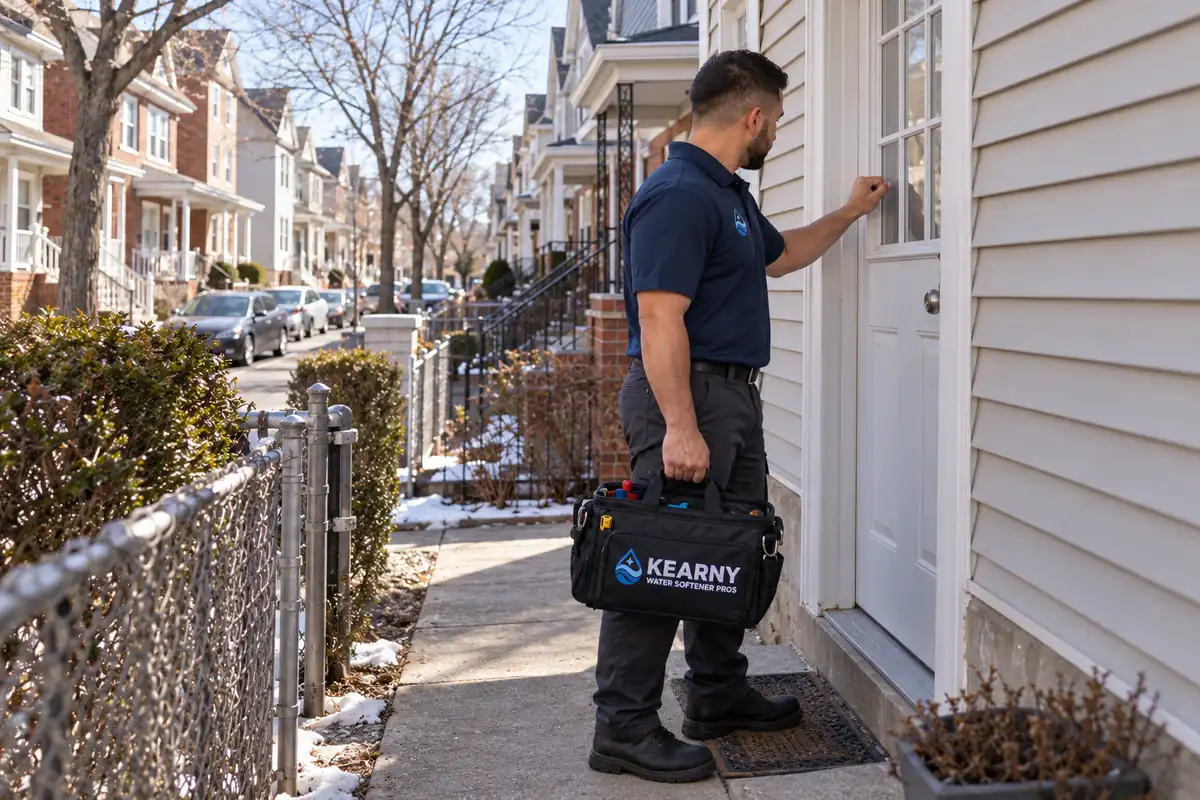
Call Kearny Water Softener Pros for water softener installation in Doremus, Kearny, NJ, or help with the system you have. Our licensed technicians work on units for homes and businesses. Tell us if fixtures are scaling up, if the softener keeps draining or if you see a leak. We answer 24/7 and can discuss the next step on the call.
We keep you posted on when to expect us.
Review the approach and price before deciding.
Equipped vehicles and respectful cleanup.
Neighbors helping neighbors, from the first call to the final check.
How much water goes through a softener determines how quickly it needs to recharge. At a Doremus home, it helps to know how many people share the showers and laundry. At a business, list the fixtures or equipment that draw water during the same shift. The technician uses that information along with a hardness test and a look at the available space to discuss a unit that fits.
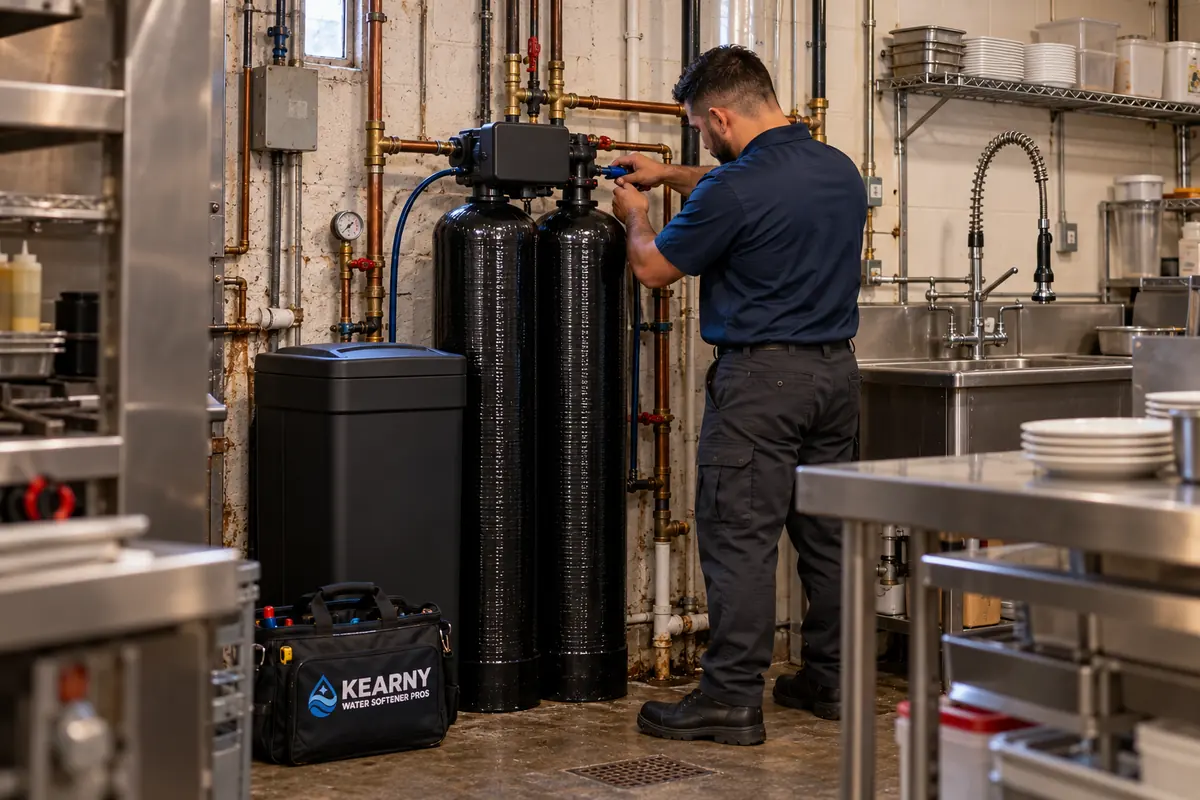
Call to talk through water softener service for a Doremus home. For equipment that serves a work site or a shared supply, ask about commercial water softener services and tell us what needs treated water.
At the installation visit, the technician checks the incoming line, confirms there is room to refill the salt tank and identifies a place for the drain. The water test and busiest periods of use help determine capacity.
View service →02If parts keep wearing out or you have changed what the system serves, ask about replacement. The size of the new unit, its connections and how the existing tanks can be removed all affect the price.
View service →03A tank that overfills or a controller that skips recharge cycles needs a check. The technician looks at what the unit does in each stage and discusses whether it needs cleaning, a setting change or a repair.
View service →04When the unit recharges but hardness keeps showing up downstream, the technician looks at salt use and the condition of the resin. New resin may be an option if the tank and valve can stay in service.
View service →05Salt deposits or debris can get in the way of making brine. A cleaning visit includes checking the condition of the tank and the connections that carry salt water to the resin and back.
View service →06Changes in daily demand can throw off a setting that used to work. The technician compares current usage and hardness with the amount of salt and water the unit uses to recharge.
View service →07A hardness reading at the supply and another after the unit can show where treatment is falling short. Mention staining or sediment so the technician can consider other tests as well.
View service →08A filter can be selected for the issue found in the water, such as grit that keeps clogging fixtures. The technician considers the expected flow and the space needed for the next filter change.
View service →09For softening at the main line, the technician checks how different fixtures share the supply. Discuss which lines need treatment, where the bypass would go and when the water may need to be off.
View service →Tell us on the phone what the softener serves, what changed and whether anyone needs to approve access. At the visit, the technician checks the symptom and explains the work and the price before it begins. For a shared supply, you can discuss a window for shutting off the water.
A unit that runs out of soft water partway through a shift or a busy evening may need a settings or capacity check. The technician asks when demand peaks and tests the treated water.
If the equipment sits behind a locked door or in a shared mechanical room, tell us who can let the technician in and who controls the shutoff.
A crust of salt may hide a gap underneath. If the top looks unchanged even though the unit is cycling, mention how long the salt has been sitting at the same level.
The technician looks at space around the tank and where supply and drain lines would run. For replacement, mention any steps, tight turns or doors along the way to the unit.
Ask what the technician found, which parts are involved and how the price would change if more work is needed. You can go over those details before the work starts.
Many softener symptoms are easiest to describe by comparing when they happen. Tell us whether they appeared gradually, started after a refill or only occur when demand is high.
Hardness can leave white residue on taps, glassware and other surfaces. Ask about whole house water softening solutions if the buildup is widespread, and have the incoming water tested before picking a system.
A hard layer can leave the tank looking full when salt below it has dissolved. Leave the tank closed if opening it would put you near a leak or wet electrical connections.
Stains can come from iron in the supply or from plumbing or equipment. Note whether the discoloration only occurs at one tap or clears after the water runs for a while.
Water may keep moving through the drain after the unit should be idle. If you can see the display from a dry spot, write down its message without opening the controls.
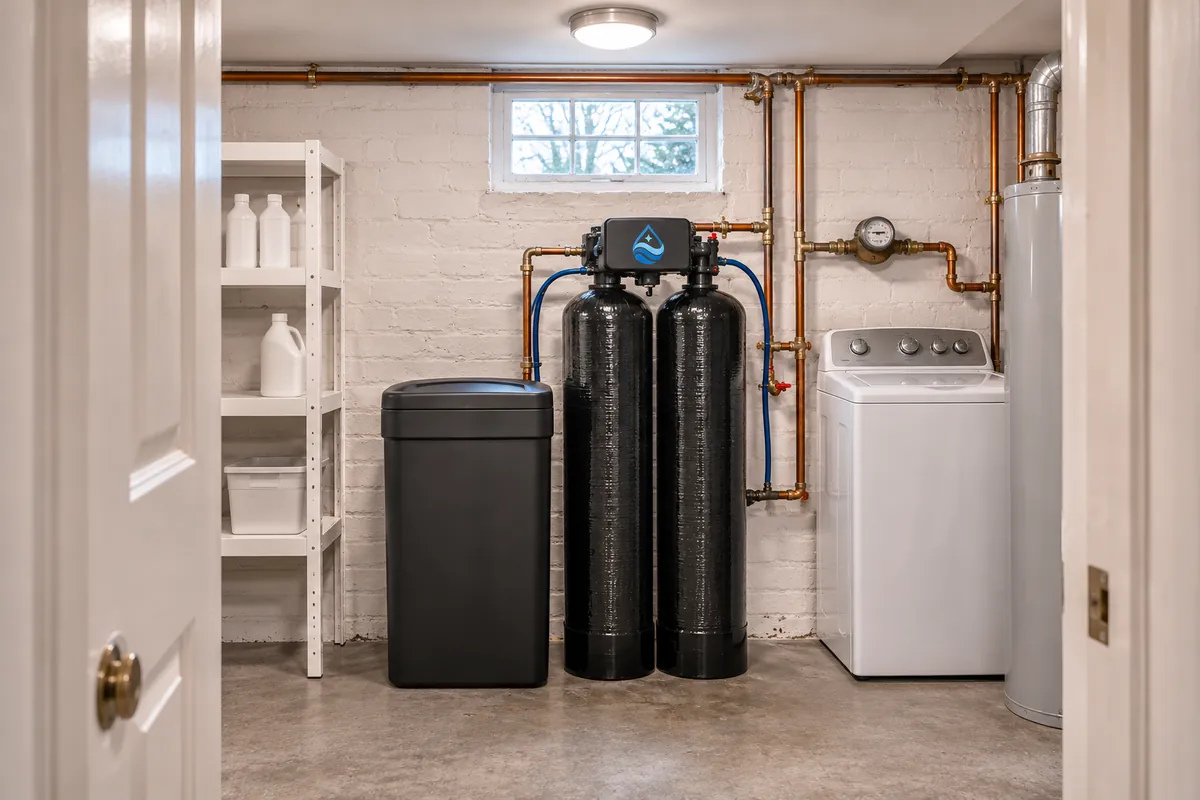
Call to confirm service at your Doremus address. We work with household systems as well as commercial sites that need to coordinate treated water use and access to shared equipment.
Tell us which parts of the building the unit serves and whether separate users need notice before the water goes off. The scope of work depends in part on that layout.
For a house call, tell us where you see scale and when you last added salt. If you need a new unit, plumbing changes and room for the tanks are part of planning the job.
Describe any equipment that draws treated water and when it draws the most. The technician can review unit capacity and how the system recharges during normal use.
Share the site contact and the location of the mechanical space when you call. If the unit serves particular equipment, explain how a shutoff would affect it.
These are situations you can describe on the phone. At the property, the technician checks the system and discusses the next step in light of how you use the water.
Make a note of where fresh deposits appear. The technician tests at the tap and asks how much water the home uses before recommending changes to an existing unit or a first installation.
Mention whether both hot and cold taps leave marks. The technician may sample water before and after the softener to work out where the color is coming from and whether filtration could help.
Tell us if the drain keeps running and whether parts of the site still have water. The technician checks the controller and valve and explains what a repair would require before changing parts.
Use the change of season as a reminder to review the salt level, the cycle schedule and what runs off the treated supply. Changes in use matter when setting up a softener.
In spring, note any scale you can see as you wash fixtures or put a utility sink back into regular use.
If summer brings longer hours or more people using water, watch how often the unit calls for salt.
In fall, review who can reach the equipment and shutoffs if the usual site contact is away.
In winter, pay attention to any section of the supply or drain in a space that could freeze.
We also serve the Kearny neighborhoods listed below. Call with the property location and tell us what the softener supplies.

Kearny Central is nearby and shares many water quality issues, so our crews often route between the two areas efficiently.
Local coverage and details
Lafayette is a short drive away, and its residents often call our local team for water softener repair and maintenance.
Local coverage and details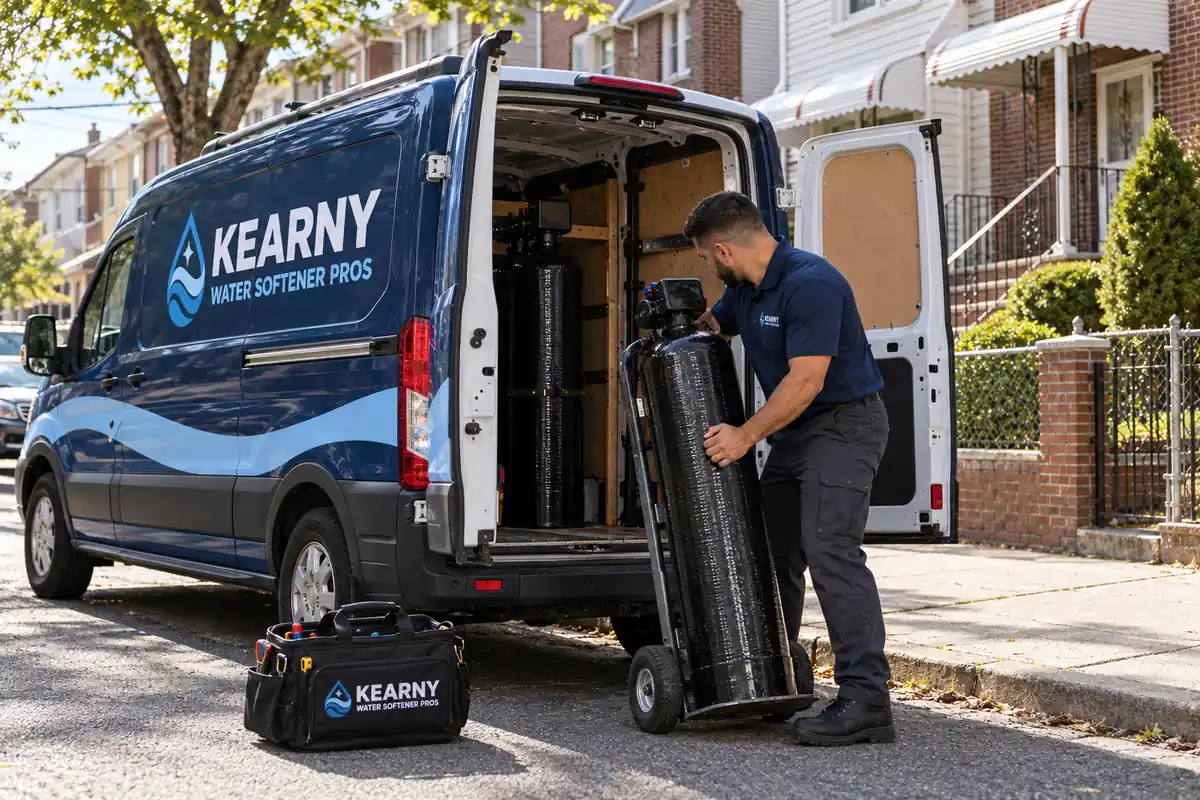
West Kearny's residential zones are a short drive from Doremus, enabling quick scheduling of water testing and hardness analysis.
Local coverage and details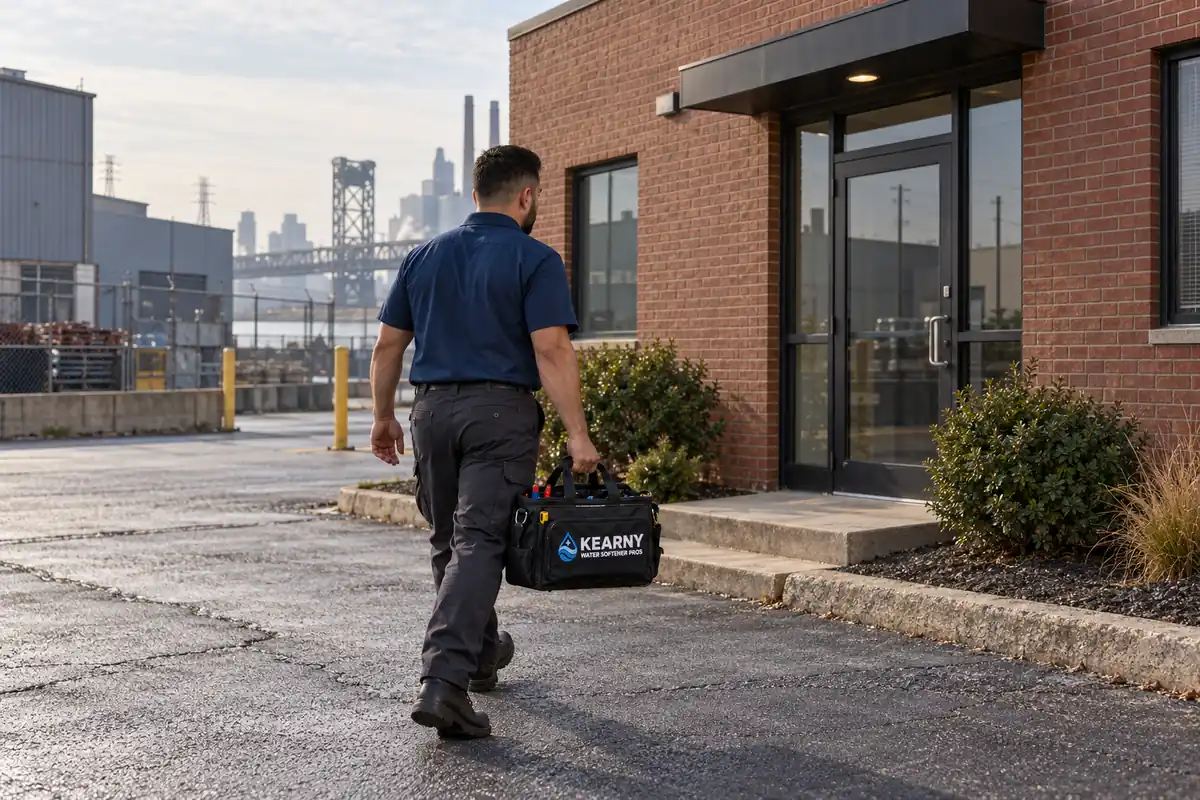
South Kearny's industrial facilities relate closely to Doremus's commercial clients, requiring similar water treatment solutions.
Local coverage and detailsAsk the contractor how they will check your Doremus system and what the visit will require. For a site with more than one water user, ask who needs to be available during the work.
Ask how to verify the credentials listed on this page and who will be responsible for the work.
Ask the technician to explain how the tanks, connections and controls were checked. The price can depend on which parts can stay and how accessible they are.
Yes. We answer 24/7. If water is pooling near a softener or water heater, close the leaking unit's water supply if safe to reach, then call.
Ask where samples would be taken. Readings at the supply and at the affected tap can help show whether to look at incoming water or at the building's plumbing.
The technician explains the price before any work starts. Ask how the price accounts for the parts, the access to the system and any changes to the plumbing.
NSF International
Environmental Protection Agency
Water Quality Association
General liability coverage
Member
Member
Yes. We provide licensed water softener installation for Doremus homes and commercial properties. Tell us what the treated water is used for and where there is room for the equipment.
We answer 24/7 for urgent calls. If a unit has an active leak or keeps sending water to the drain, call and explain which equipment is affected and whether you can reach its shutoff safely.
We handle repair, resin replacement, cleaning, hardness testing and filtration in Doremus. For a business with equipment connected to the treated supply, tell us what that equipment needs before you choose a service.
Call and tell us what the unit serves and what changed. Identify the site contact if access is controlled. The technician checks the system and goes over the price before starting the repair.
Shut off the water feeding the leaking softener or water heater if the valve is safe to reach, and call right away. If that fails to stop the flow, use the main water shutoff if accessible. Avoid any wet wiring or outlet.
Call any hour with a question about a Doremus softener. Let us know whether the unit is in a home, a shared utility room or a work site.
Call our local team
Call about a new Doremus installation, a system that needs routine care or a unit that has stopped working. We answer day and night. Tell us what you see and which parts of the property depend on the softener.
For a house, note when the salt was last refilled. For a work site, have the property contact and the location of the mechanical room handy. Mention any active leak at the start of the call.