Clear arrival times
We keep you posted on when to expect us.
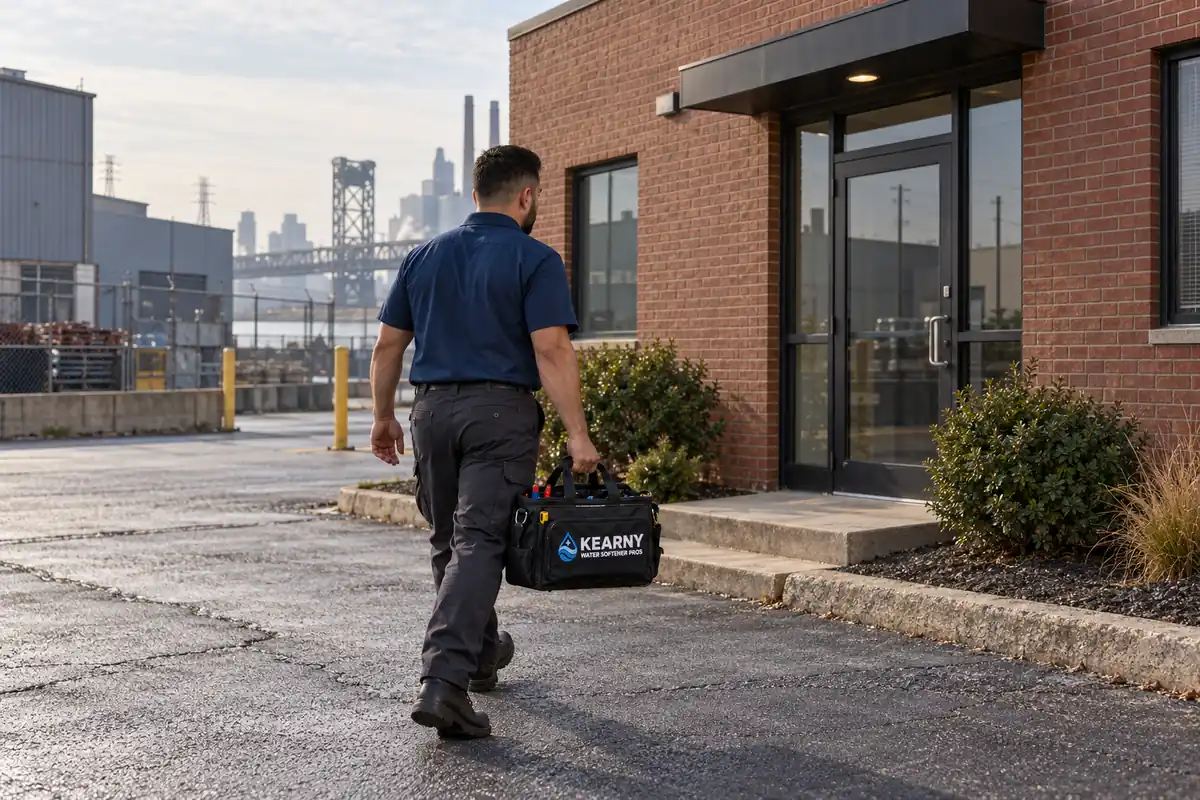
Call Kearny Water Softener Pros for water softener installation, replacement or repair in South Kearny, NJ. If you see white deposits, find dampness beside the unit or hear water running to the drain, describe what changed. We answer 24/7. For a shared or commercial system, tell us what is connected to the treated supply.
We keep you posted on when to expect us.
Review the approach and price before deciding.
Equipped vehicles and respectful cleanup.
Neighbors helping neighbors, from the first call to the final check.
Call for water softener service when the fixtures are scaling up or the current system struggles during busy periods. In South Kearny, a visit might involve a house, a mixed-use property or a site near Kearny Point. Describe what the unit supplies, how many fixtures or pieces of equipment draw water together and who can give the technician access.
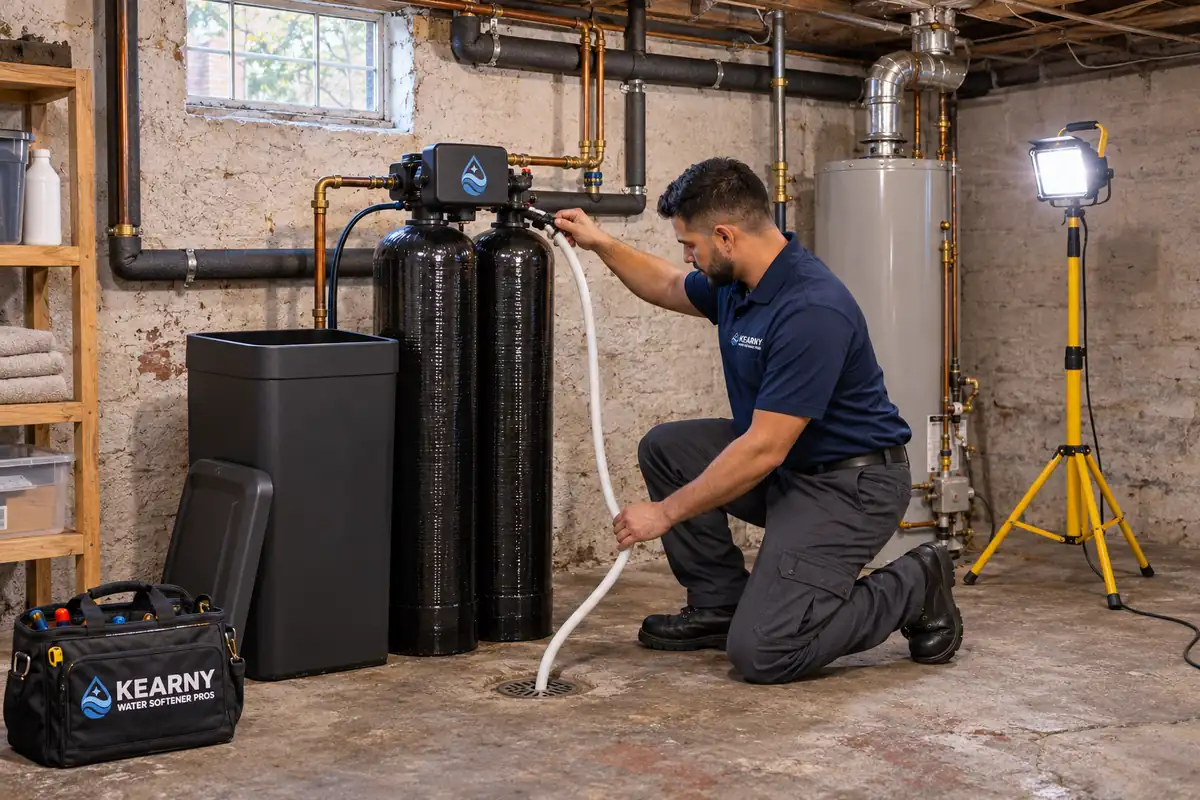
Start with a phone call about your South Kearny property. Describe which taps or equipment need treated water, whether a softener is already in place and whether anyone else needs to approve access to the unit.
For a new install, the technician tests the water, checks the space near the supply line and discusses where the drain and shutoff will go. Sizing depends on the amount of hardness and how much water is used at once.
View service →02When you are choosing between repair and replacement, consider what the current setup serves and which connections can stay. The technician explains what needs to change and reviews the price before old equipment is disconnected.
View service →03Our licensed technicians check the salt tank, valve and drain path when the unit runs constantly, leaves deposits or stops cycling. Call with any display message and say whether the fault is constant or comes and goes.
View service →04Water can turn hard between cycles when the material in the resin tank loses capacity. The technician checks whether the system draws enough salt water to recharge and whether the tank and valve are worth keeping.
View service →05Salt can harden along the sides of the tank or leave residue that affects the refill parts. During service, the technician can clean the tank and check how water moves through the brine connection.
View service →06A building that uses water in bursts may need different cycle settings from one with steady demand. Bring up recent changes in water use when asking the technician to check hardness and adjust the controls.
View service →07Tests at the incoming supply and a treated fixture help show how the system is performing. If water has color or visible grit, describe where it appears so the technician can pick suitable sampling points.
View service →08If you are concerned about sediment, staining or taste, ask the technician which type of filtration fits the finding. A filter also needs space for service and capacity for the flow it will handle.
View service →09A system on the incoming line can serve multiple areas of a building. The technician checks which lines need soft water and discusses how to keep the unit accessible for salt and other upkeep.
View service →Call with the main symptom and the location of the system. For a site with a shared supply, let us know who controls access and who decides when the water can be turned off. The technician reviews what the work involves and explains the price before work starts.
A technician can take samples at the affected tap and at other points in the water line. If iron is entering with the supply, ask whether iron removal systems would help and which lines would need treatment.
Look into the salt tank from above if it is dry around the unit. A hard crust with a gap beneath it can keep salt from dissolving. The technician checks how the unit makes and draws brine.
When calling about a shared building or work site, identify who can unlock the equipment area and explain which users will be affected if a line has to be shut off.
The licensed technicians can inspect where a softener ties into the water line and where its drain empties. Tell us if space is tight around the unit or if connections are hard to reach.
Ask the technician to show you the normal settings, when the unit will recharge and where to check the salt. If the unit serves equipment, discuss when it draws the most water.
Call when you see a change at the tank or tap. Information about what was running at the time can help the technician tell whether the problem starts in the softener or another part of the water supply.
Salt sometimes forms a hard layer while the level underneath falls. A tank can look full while softening drops off. Avoid forcing the crust and report what you can see.
The technician tests for hardness and checks whether brine reaches the resin before deciding whether to perform resin replacement. Mention whether scale appears at all times or after the heaviest water use.
If water keeps going down the drain, note what stage appears on the display and when you first heard the water running. The technician checks where the cycle is sticking.
Look for pooled water from a dry spot. If you can reach the affected unit's water shutoff safely, close it and call. Use the main shutoff if water keeps spreading and it is safe to reach.
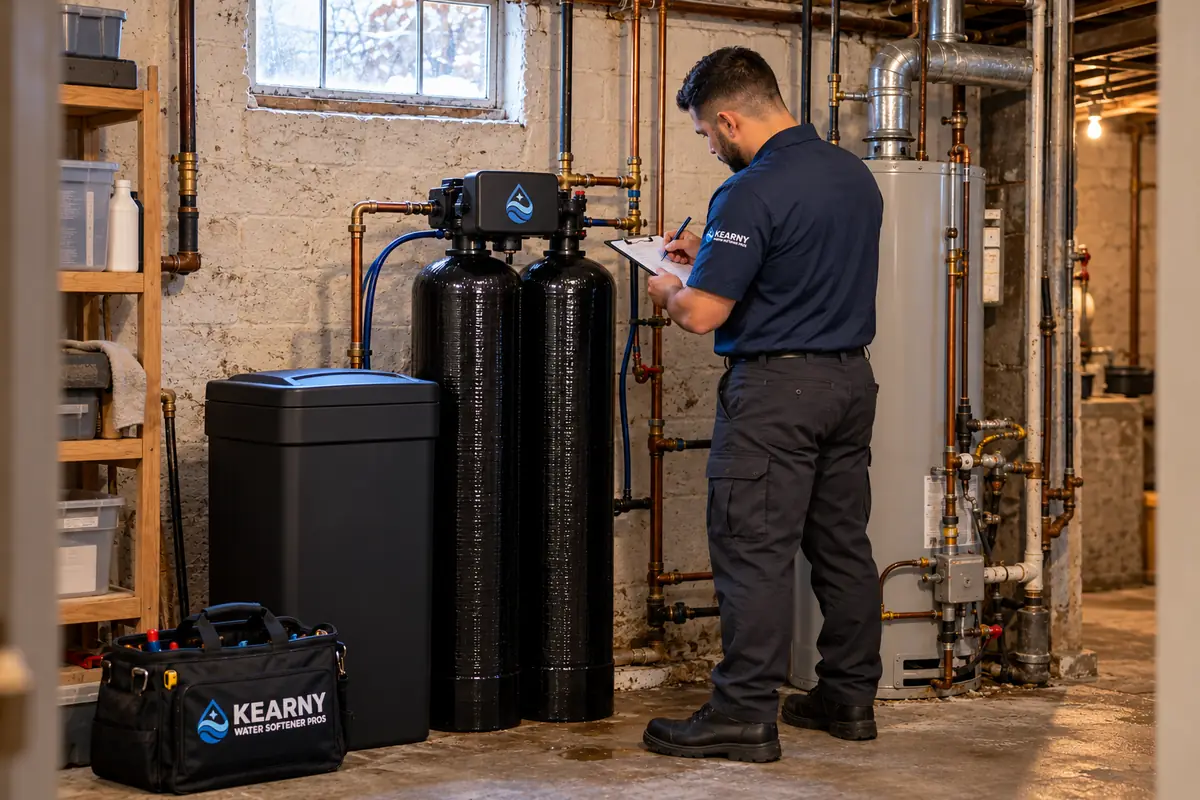
We cover South Kearny homes, mixed-use properties and commercial sites. Call with the location of the system and explain what the treated line feeds. A unit serving one home calls for different planning from a unit tied into a shared supply.
In a house, tell us whether you want the whole home softened and where the tanks could sit. The technician also checks access to the incoming line and a place for the drain.
For a site near Kearny Point, describe the work the treated line supports and any limits on when water can be off. Have the equipment contact available for the visit.
If apartments and businesses use the same softener, tell us who manages the water line and how the shutoff would affect each occupant.
Call to discuss access and how the plumbing is laid out. The setup and price can depend on how much water the unit treats, the space for tanks and any connection changes.
Calls may involve a home with scaling fixtures, a blocked salt tank or a problem with equipment on a shared supply. Tell us what you notice and when the problem tends to happen.
The technician can test hardness and ask which fixtures are used together. If a new unit makes sense, discuss where it would go, which lines it would treat and how it would connect.
If salt stays packed together, mention how often you refill the tank. The technician can check how the brine forms and whether the unit needs to be cleaned and sanitized or have a part checked.
Say when demand goes up and whether the unit recharges while equipment is running. The technician can check the treated water and review the resin condition, settings and capacity before suggesting work.
The seasons are convenient reminders to check the salt level and the space around the equipment. If water use changes during the year, that can affect when a softener needs to recharge.
In spring, check whether anything stored near the system makes it hard to reach the tanks, bypass or shutoff.
If summer brings changes in business hours or more water use at home, watch what happens to the salt level between refills.
In fall, check the display and review when the system is set to run.
In winter, keep an eye on lines in any space where they could freeze, including sections close to an unheated door.
If the property is outside South Kearny, check the nearby service areas below. You can confirm coverage by calling us with the location of the unit.
Kearny Central is nearby, shares similar water hardness issues, and we often work there too.
Local coverage and details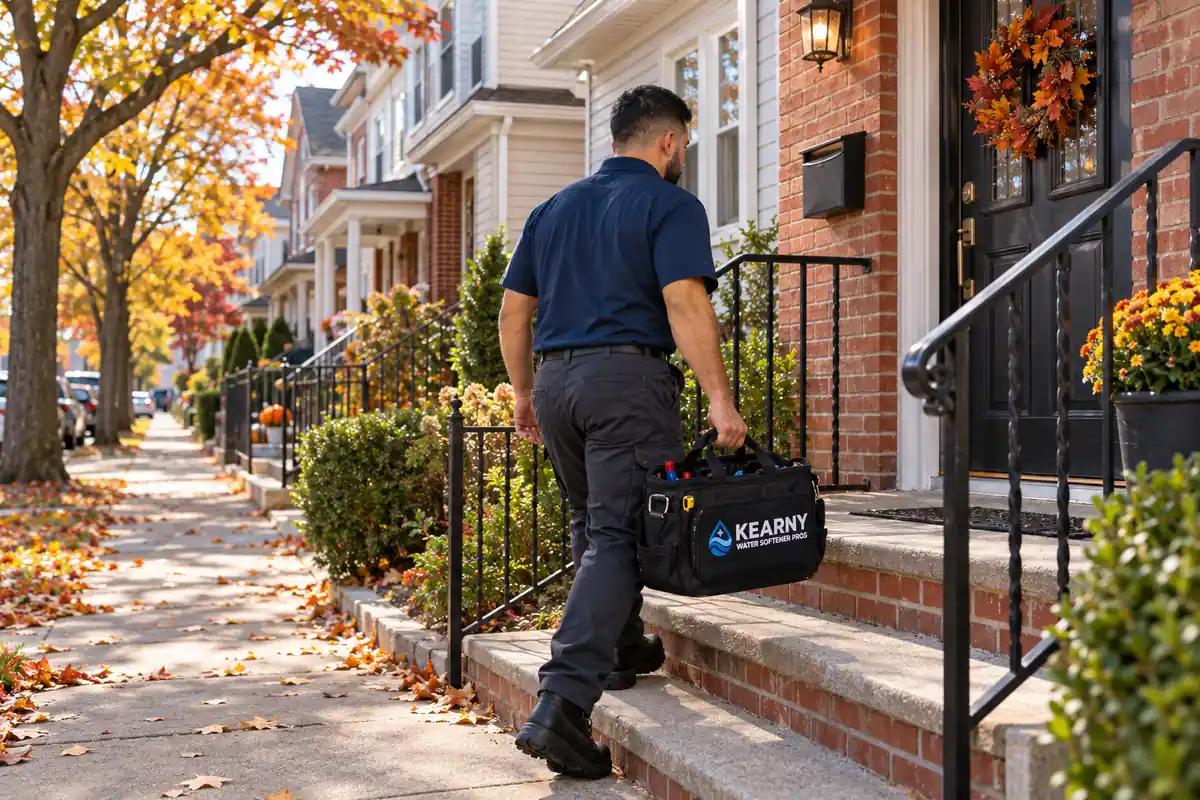
Lafayette is a short drive away, and its residential areas get the same water softener maintenance we provide in South Kearny.
Local coverage and details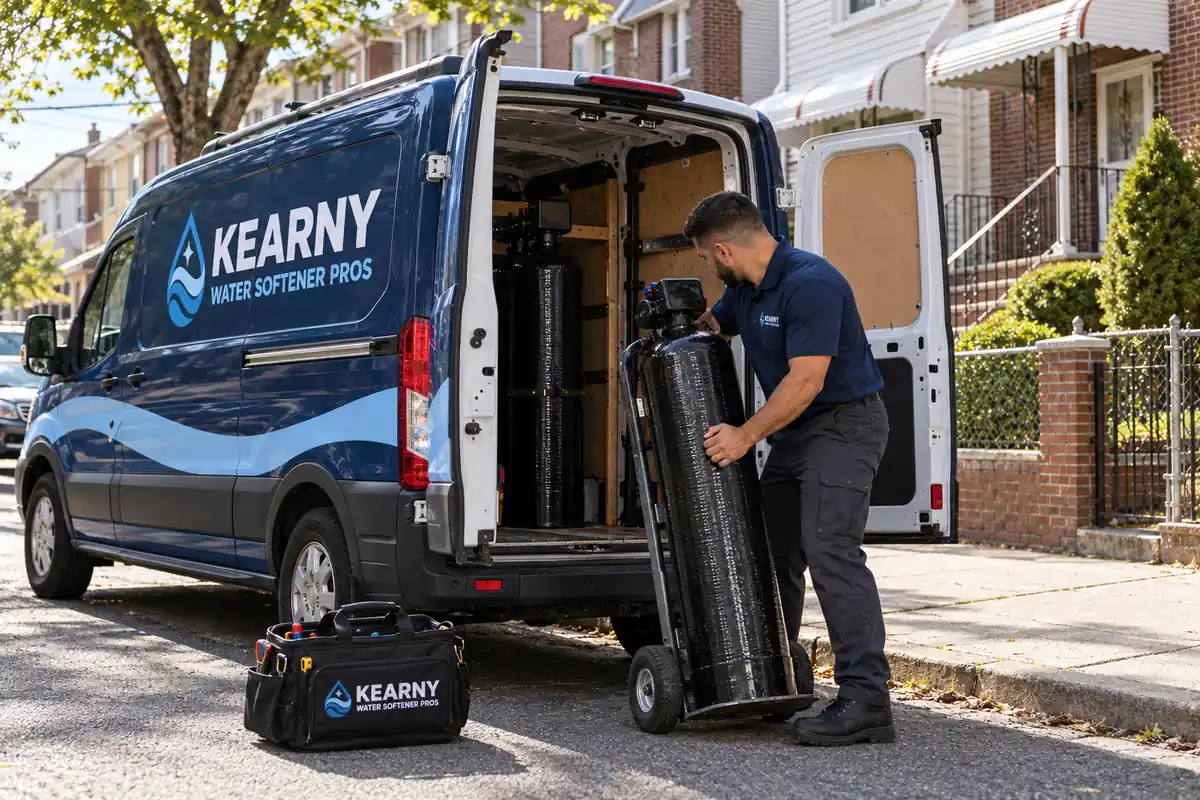
West Kearny is nearby, and its clients benefit from our 24/7 emergency water softener service.
Local coverage and details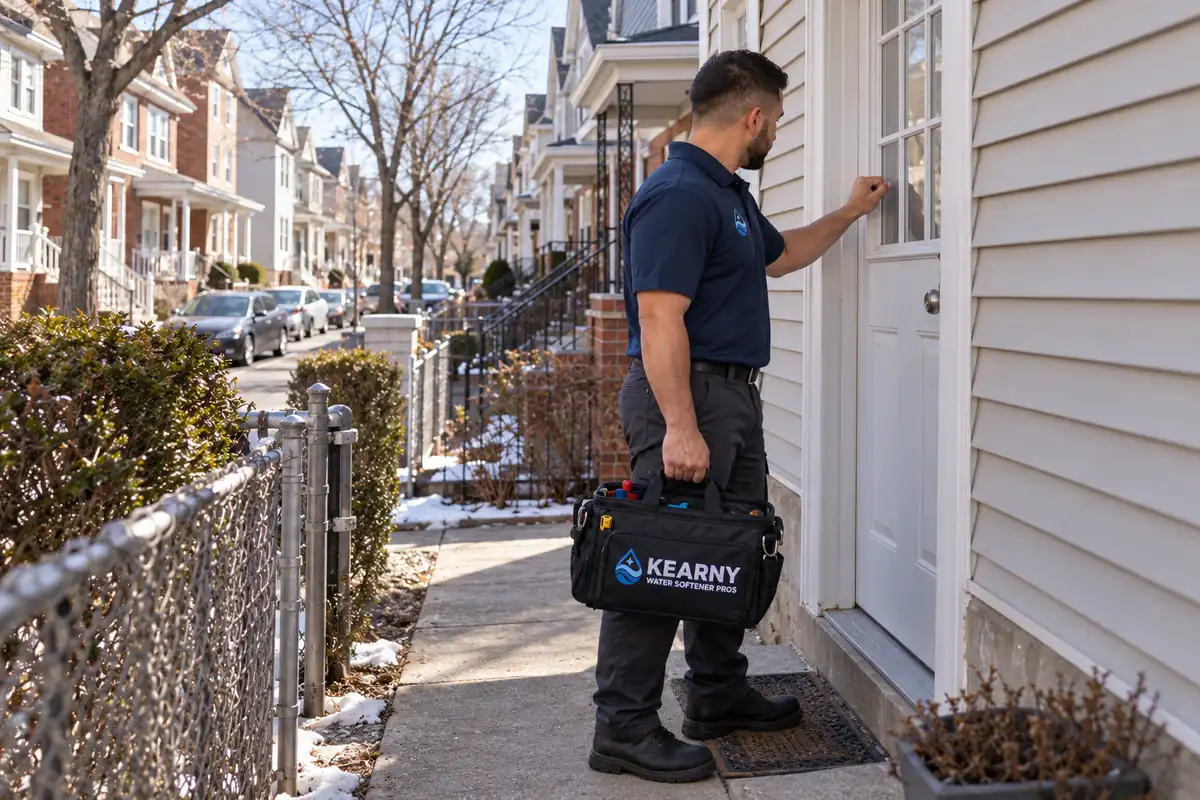
Doremus is nearby and shares South Kearny's commercial water treatment challenges and solutions.
Local coverage and detailsAsk how the contractor will check your South Kearny system and which parts of the property the work will affect. If the unit supplies a business, explain what happens if the water needs to go off.
Ask how to verify the license and insurance details listed on the page for the people doing the work.
We answer 24/7. If the unit is leaking or sending water down the drain continuously, say so at the start of the call.
Tank size, existing connections, available drainage and removal of the current unit can affect the price. The technician explains the price before any work starts.
Ask which taps the technician will check and whether samples will be taken at the supply as well as the affected area. The results help guide any filtration decision.
Know where the equipment sits, who has the key and what the unit supplies. Mention whether anyone needs notice before the water is shut off.
NSF International
Water Quality Association
General liability coverage
Member
Member
Yes. We provide licensed water softener installation for homes and businesses in South Kearny. When you call, describe your water use and where the system could fit, or tell us about the unit you want to replace.
Call us for 24/7 emergency water softener service when you find a leak or the drain flow will not stop. Tell us what the system supplies and whether you've been able to isolate it.
We install and repair softeners and also handle resin replacement, hardness checks and filtration. If a tap leaves rust-colored marks or visible grit, tell us where it happens so the technician can check that line.
Call to explain what changed and when you see the problem. The technician inspects the unit and tells you the price before work begins. Access, parts and any plumbing changes affect that price.
Close the water shutoff feeding the leaking softener or water heater if you can reach it safely, then call. If you cannot isolate the unit and water continues to spread, use the main shutoff from a safe spot. Avoid standing water near electrical connections.
Call any time to discuss your South Kearny softener, whether you are planning an install or need help with a leak.
Call our local team
Call for a South Kearny installation, a repair or help with the unit's settings. We answer during the day and overnight. Tell us what the unit serves and whether any problem needs urgent attention.
Give us the unit's location and describe what happens at the taps, tank or drain. For shared equipment, name the person who can coordinate access to the shutoff.