Clear arrival times
We keep you posted on when to expect us.
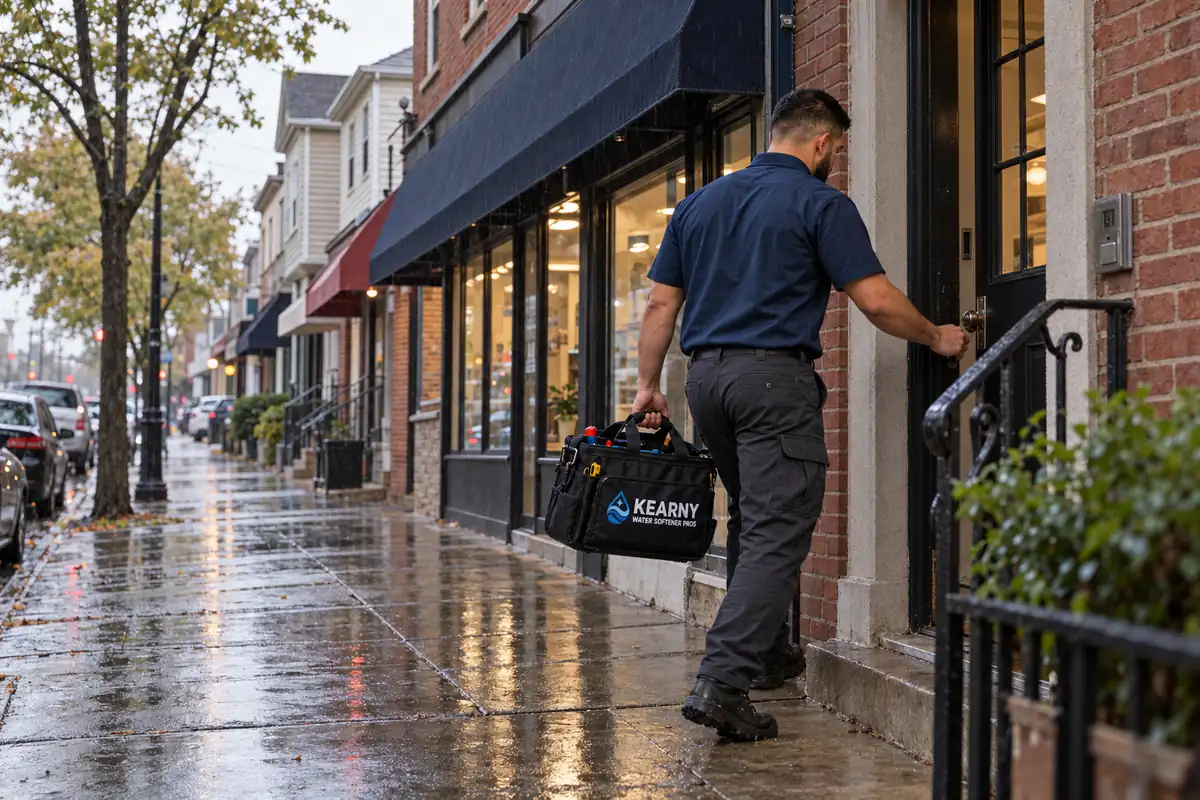
Call Kearny Water Softener Pros for installation or repair on Harrison Avenue in Kearny, NJ. If glasses come out cloudy, salt sits untouched in the tank or a puddle appears beside the unit, tell us what changed. We answer 24/7 for homes and businesses. The technician explains the work and the price before getting started.
We keep you posted on when to expect us.
Review the approach and price before deciding.
Equipped vehicles and respectful cleanup.
Neighbors helping neighbors, from the first call to the final check.
A softener for a house has to keep up with overlapping showers, laundry and dishes. A storefront or a property with several occupants can have a different pattern of water use. On Harrison Avenue, we look at the building's busiest periods, the hardness at the tap and the room around the main water line before recommending a setup. If you already have a softener, describe when you first noticed a change and whether it affects the whole building.
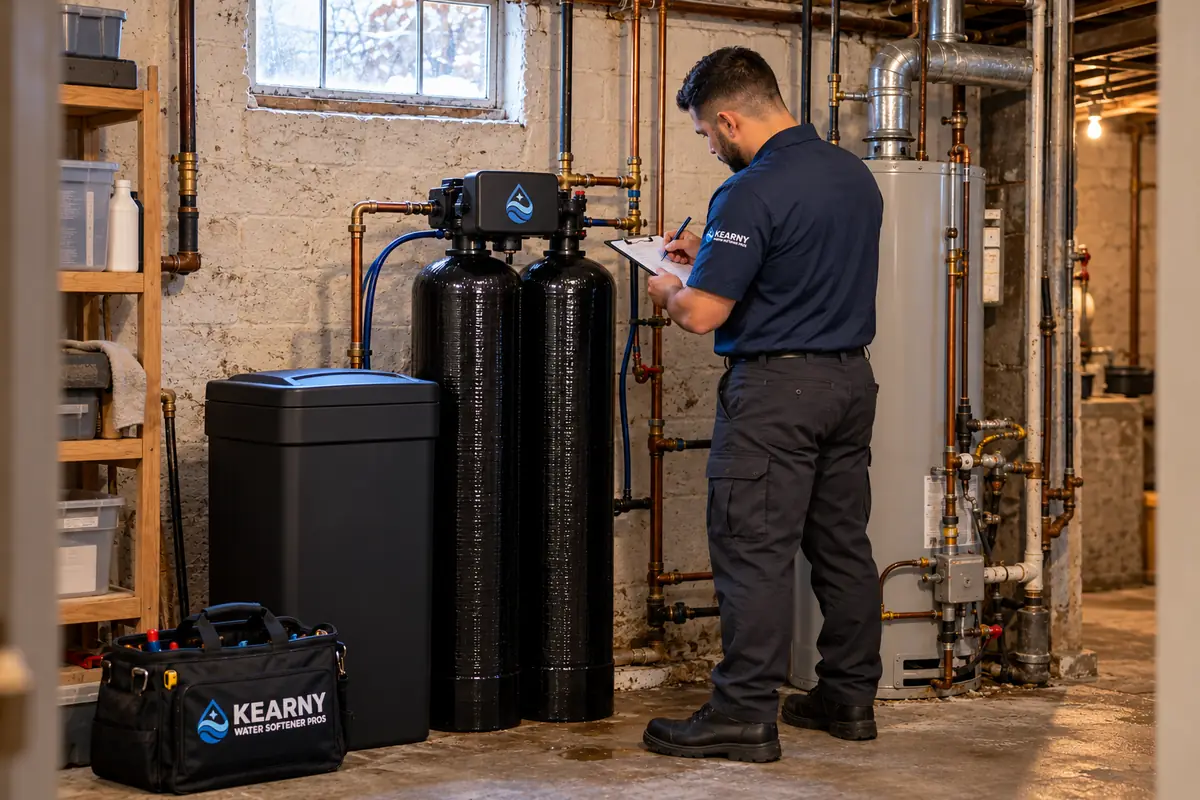
Call to arrange water softener service on Harrison Avenue. If the problem is recurring scale at several fixtures, ask about residential water softener installation and have the water tested before choosing a unit.
The installer checks how much room there is for the tanks, where the drain line can run and how the unit can be shut off for future service. Capacity depends on hardness and the amount of water the property uses.
View service →02A unit that needs frequent repairs may be worth replacing. The technician checks the tank, valve and fittings, then explains which parts would be reused and whether the water lines need changes for a different unit.
View service →03Our licensed technicians can inspect a machine that keeps running, stops drawing salt water or leaves the floor wet. The symptom helps them narrow down whether to look at the drain line, valve or tank first.
View service →04Resin is the material inside the softener tank that captures hardness minerals. If hardness returns in spite of normal cycles and enough salt, the technician checks the treated water and the brine draw before proposing new resin.
View service →05Grit and leftover salt can collect at the bottom of the brine tank. During cleaning, the technician checks the drain and brine connections and shows you where to look the next time the salt is low.
View service →06If the water still feels hard after a cycle or you go through salt unusually fast, ask about the settings. The technician compares them with a hardness reading and your water use before making adjustments.
View service →07Testing before and after the softener shows how much hardness the unit removes. Tell us if you also see brown streaks or grit, since those symptoms may call for a different check.
View service →08Filtration can address things like visible sediment or a persistent taste. The technician asks where you notice the change and checks which water lines a filter would need to serve.
View service →09A whole-house unit treats the incoming supply for multiple rooms. The installer can show you which fixtures would be served and discuss whether to leave an outdoor tap on untreated water.
View service →Start by calling with the symptom and the location of the unit. If somebody else controls access to the water shutoff, mention that on the call. At the visit, the technician checks the unit and explains the proposed work and price before you decide.
A crust can hold the salt up above an empty space, leaving too little salt water to recharge the resin. The technician checks below the crust and looks at how the tank refills.
Say whether the staining appears at hot taps, cold taps or both. If the checks point to iron in the incoming water, the technician can discuss iron filters ahead of the softener and explain what that setup would involve.
When several fixtures lose flow together, the technician checks whether the softener is restricting the supply or the issue is elsewhere in the building. Tell us if the drop only happens when another tap is open.
Ask who needs notice if the water goes off during the visit. For a shared building, the technician needs access to the incoming supply and enough room to reach the service valves.
Ask to see the shutoff and bypass positions and how to recognize a normal recharge cycle. If settings were changed, the technician can explain what to watch for over the next few cycles.
You can often describe the problem without opening the unit. Note the salt level, any message on the display and whether the symptoms started after a power outage or plumbing work.
The top of the salt may look full for a long time while the water turns hard. A packed crust can block salt from reaching the water below. Leave the tank intact for inspection.
Hardness that returns between recharge cycles can point to reduced resin capacity. A technician can compare tap readings and determine whether to replace the softener resin or correct a problem with the recharge cycle.
A valve that gets stuck can leave water running to the drain long after a normal cycle should end. Note when the noise starts and what the display shows, then call for help.
Water can escape from a tank, a connection or the drain line. If you can reach the shutoff safely, stop the water feeding the leaking unit and call. Stay clear of wet outlets.
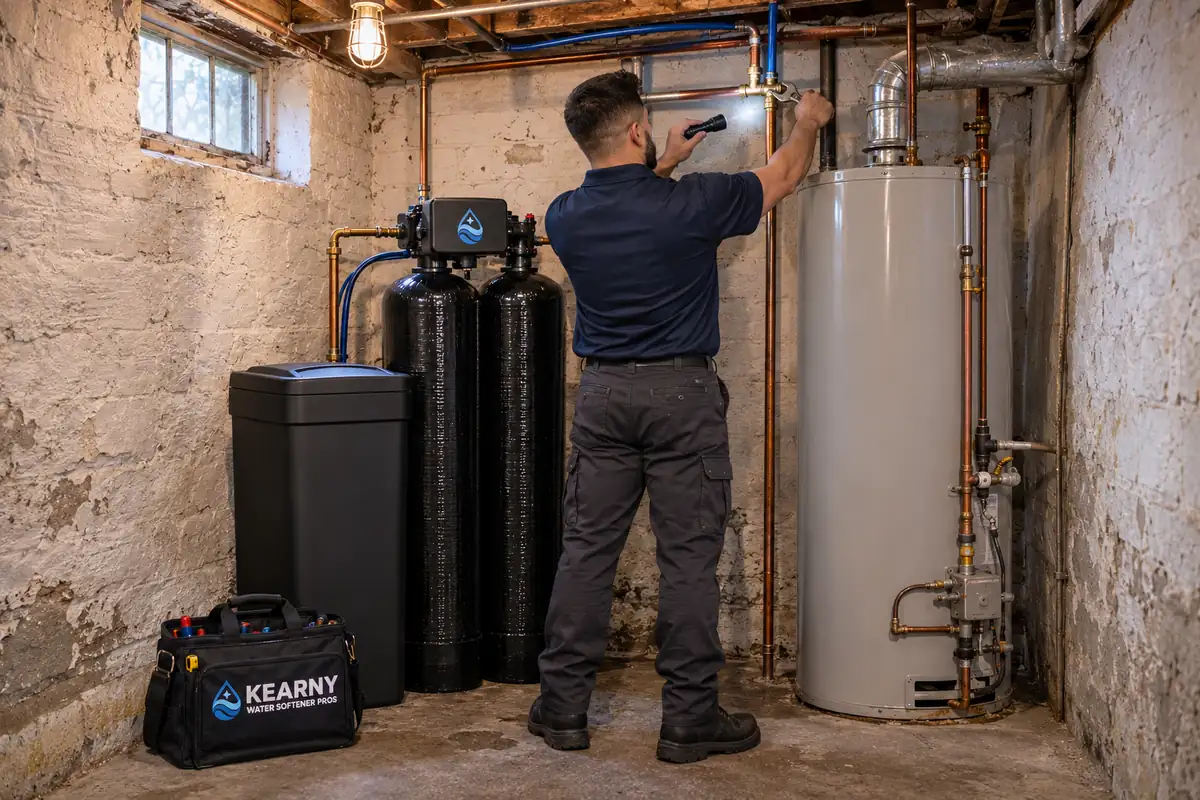
We serve addresses along Harrison Avenue, including homes, shops and buildings with shared water lines. Call to confirm coverage and tell us whether the softener serves the whole building or only part of it.
For a home installation, discuss the number of people using water and where the unit will fit. Space, water-line changes and unit size all affect the price.
If apartments and a business share a supply, identify who can authorize a shutoff and who needs advance notice. We can discuss access when you call.
Have a description of the current setup handy. If a single softener serves a shop and a living space, the technician will need to know what runs at the same time.
For a storefront visit, explain which fixtures or equipment rely on treated water and when they are in use. That helps the technician plan where to begin the inspection.
You can call about any of these symptoms. The technician checks the cause on site and describes the repair and its price before starting.
Tell us when you last added salt and whether the level has moved. On site, the technician checks for a bridge, makes sure the unit draws brine and compares treated water with the incoming supply.
Note whether the color clears after the tap runs and if it shows up in other rooms. The technician can sample more than one tap to see whether the source may be in the plumbing or supply.
Ask which fixtures are affected and whether the drop gets worse during busy periods. The technician can compare flow at different points before discussing adjustments, repairs or work on the supply line.
Use each season as a reminder to look at the softener. A change in who uses the building or how much water they draw is a good reason to review its settings.
During spring cleanup, look around the unit for salt residue, damp spots or signs that stored items have bumped the drain line.
When summer guests lead to more laundry and showers, note whether the softener uses salt faster than you expect.
In fall, review changes in occupancy or business hours that may affect the busiest times of day.
In winter, look for drips at connections and drain lines in any utility space that can freeze.
Call the same number for service on Harrison Avenue or in one of the neighborhoods below. Tell us where the softener is when you call.

Kearny Central is nearby and shares similar water hardness challenges, so our crews often work in both areas.
Local coverage and details
Lafayette is a short drive away and benefits from our expanded coverage, especially for commercial water softener installations.
Local coverage and details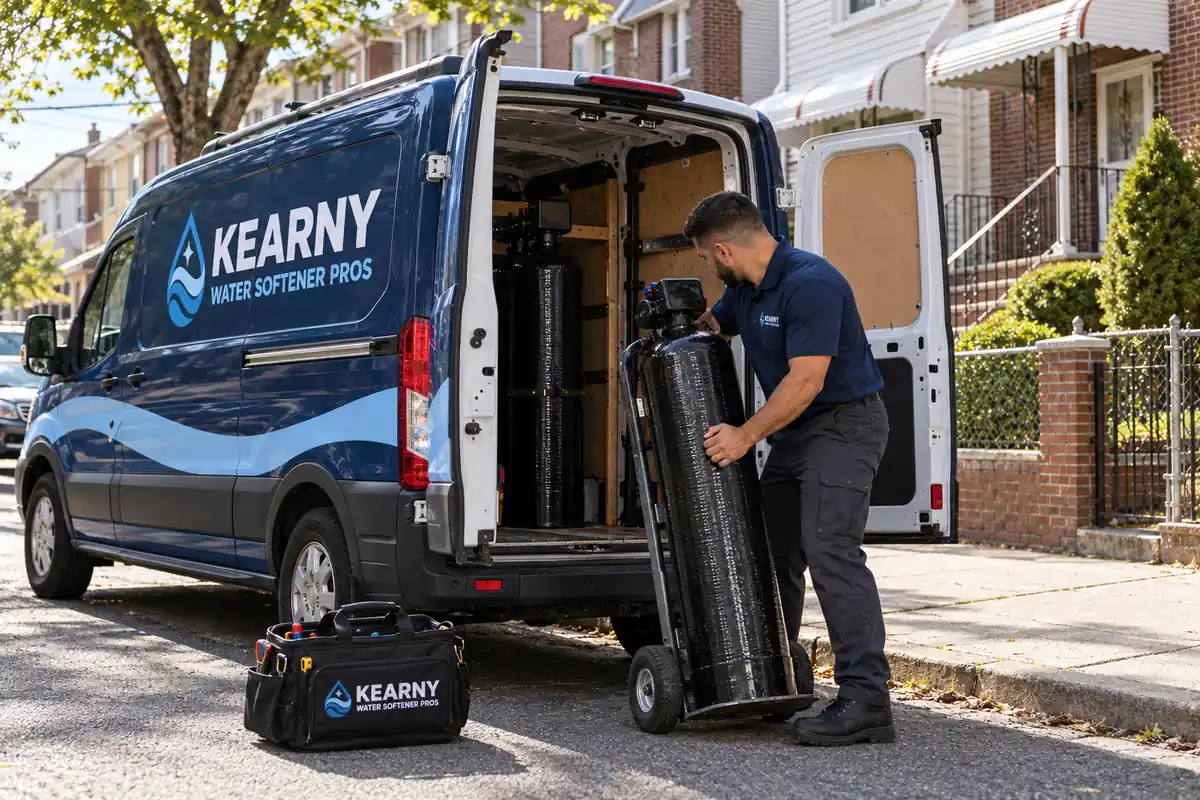
West Kearny is nearby, and we often coordinate its maintenance and emergency repairs with Harrison Avenue service calls.
Local coverage and details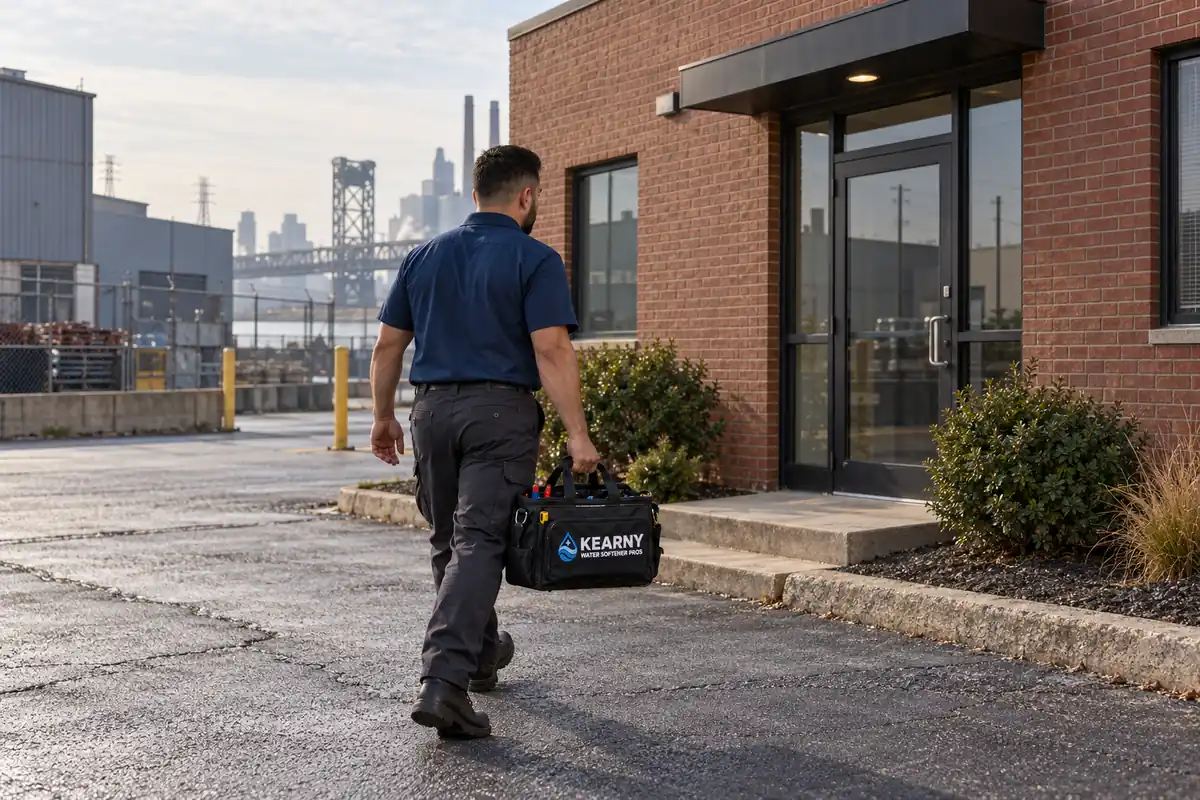
South Kearny's industrial zones require specialized water softener systems, supported by our local team.
Local coverage and detailsWhen you call about a Harrison Avenue property, ask how the contractor will find the cause of the problem, what the work will involve and when you will hear the price.
Ask who will carry out the work and how to verify their license.
We answer 24/7. If there is an active leak, tell us where the water is collecting and whether the supply to that unit is off.
The size of the unit, changes to water lines, drain access and removal of an old system can all matter. The technician explains the price before any work starts.
Ask where the hardness samples will be taken and how the readings and your water use affect the recharge settings.
Ask how to check the salt, when to revisit the settings and which parts are covered if something fails.
NSF International
Water Quality Association
General liability coverage
Member
Member
Yes. We install softeners for houses, shops and shared properties on Harrison Avenue. On the call, tell us how the building uses water and whether there is a unit in place now.
Call any hour for emergency water softener service if water is escaping or the unit will not stop draining. We answer 24/7, and knowing whether you could stop the flow helps us understand the urgency.
Along with softener installation and repair, we handle water testing, resin work and filtration. If the trouble is staining or a change in taste, tell us which taps are affected so the technician can decide where to test.
Call with the symptom, when it began and whether the unit still recharges. Repair pricing depends on access and the part that failed. The technician explains the price before any work starts.
If you can safely reach the shutoff for the leaking softener or water heater, close it and call. If water keeps spreading and you can safely reach the main shutoff, close that too. Keep away from wet plugs and wiring.
Call to ask about a Harrison Avenue installation, a change in water quality or a softener that needs attention. The line is answered 24/7.
Call our local team
For help with a Harrison Avenue softener, call Kearny Water Softener Pros. We answer around the clock, and you can ask about installation, repairs or servicing a unit that still runs but leaves hard water behind.
Tell us what you first noticed, whether the issue affects more than one fixture and where the softener sits. If there's a leak, let us know whether you've been able to shut off the water.